From 7 Days to "That's Impossible": What Agentic Development Actually Looks Like
Four projects. Four domains. A consulting engagement, two games, and an iOS app — all built agentically. Here's what actually happened.
From 7 Days to "That's Impossible": What Agentic Development Actually Looks Like
People keep asking me what agentic development looks like in practice. So here's what the last few weeks of my life looked like.
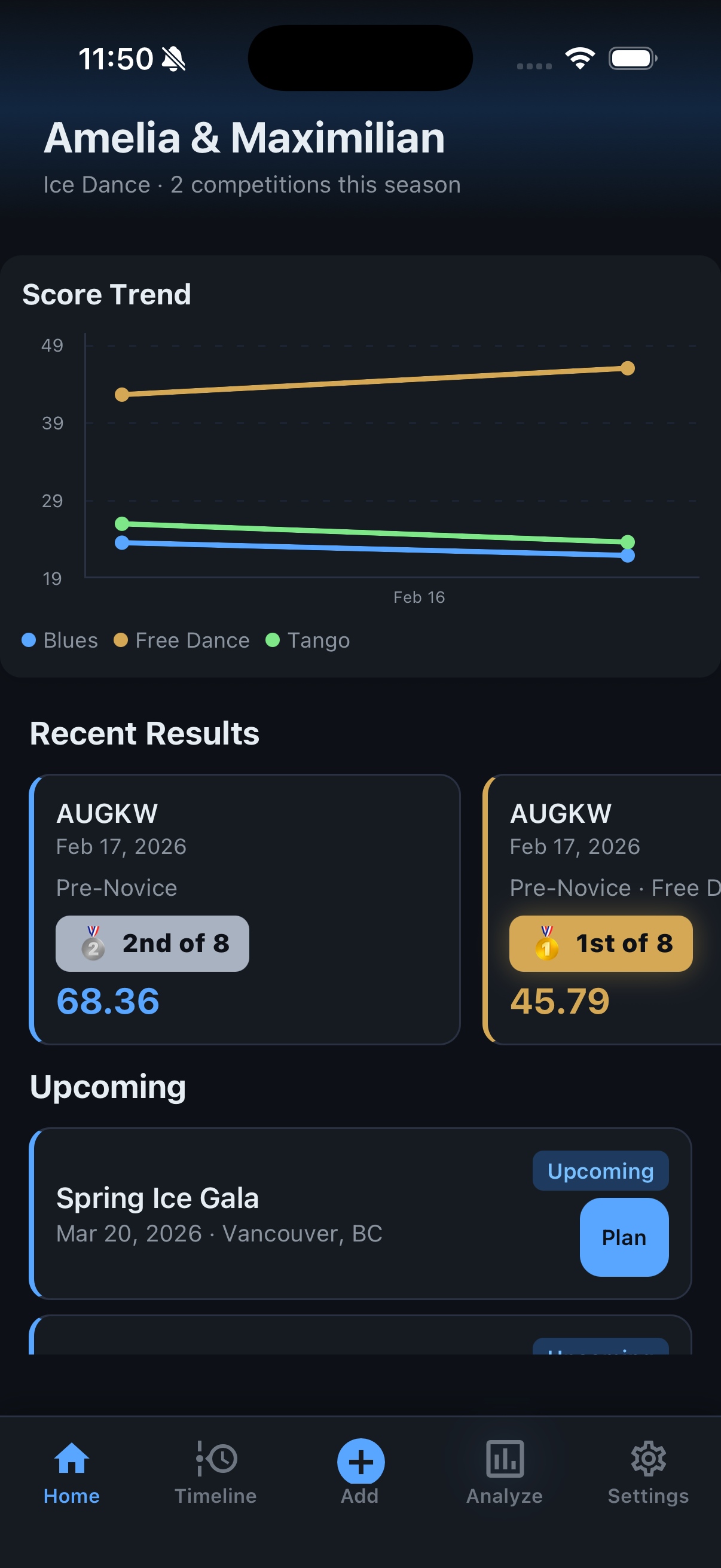
A few months ago I shipped a full iOS app — PlayTrack, a competitive figure skating analytics platform — to TestFlight in 7 days. Complete backend, parser, React Native frontend, CI/CD pipeline. Total API costs: about $100. The traditional timeline for that project is 6-8 weeks and $12-15K minimum.
When I tell people this, they assume I'm exaggerating. They think I'm describing a demo, or a proof of concept with no real functionality. I'm not. It's a working app — still actively in development and targeting release ahead of the next skating season — with a Supabase backend, competition tracking, AI-powered predictions, score visualizations, and a full dark-themed UI.
But here's the thing: that was months ago. And the pace hasn't slowed down. It's accelerated. So instead of telling you what agentic development could look like in theory, let me walk you through what it actually looked like — across four completely different projects, in completely different domains, over the last few weeks.
The Engagement That Shouldn't Have Been Possible
A research-driven startup managing complex environmental data brought me in for a short technical assessment. Their system spanned multiple repositories and cloud services — the kind of organically grown codebase common in fast-moving, academic-leaning teams.
In under two weeks, leveraging agentic workflows, I delivered:
- Security & Architecture Review — Identified high-impact vulnerabilities and mapped the system's actual behavior against its perceived design, highlighting knowledge silos and technical debt.
- Financial Visibility — A cloud cost analysis revealing actual spend was significantly higher than leadership realized, masked by expiring promotional credits.
- Interactive Dashboards — Two standalone, zero-install tools for data exploration — one of which shifted the entire dynamic of the engagement.
From Raw Data to Tooling in Hours
As part of the assessment, I was given a sample of their primary domain data — a complex, industry-standard format — to confirm it could be parsed. I decided to go further: What would a domain expert actually need to see to make a decision?
A few hours later, I delivered a single HTML file. No setup, no dependencies. Inside was a fully interactive 3D visualization with cross-sectional analysis, automated engineering classifications, and animated data slices — all using the conventions practitioners in that field expect.
It was a proof of concept, not a production product. But a senior domain expert on the team immediately compared it to commercial desktop software with significant licensing costs. The point wasn't the code — it was that agentic development made it possible to move from raw data to domain-appropriate tooling in hours, not weeks.
Two Games in a Weekend
That engagement was consulting — deep, serious, enterprise-grade work. But agentic development doesn't just work for audits and dashboards. It works for anything you can spec.
Over a single weekend — a few hours here and there between family time — I built two games. Not prototypes. Not demos. Playable games, submitted to TestFlight.
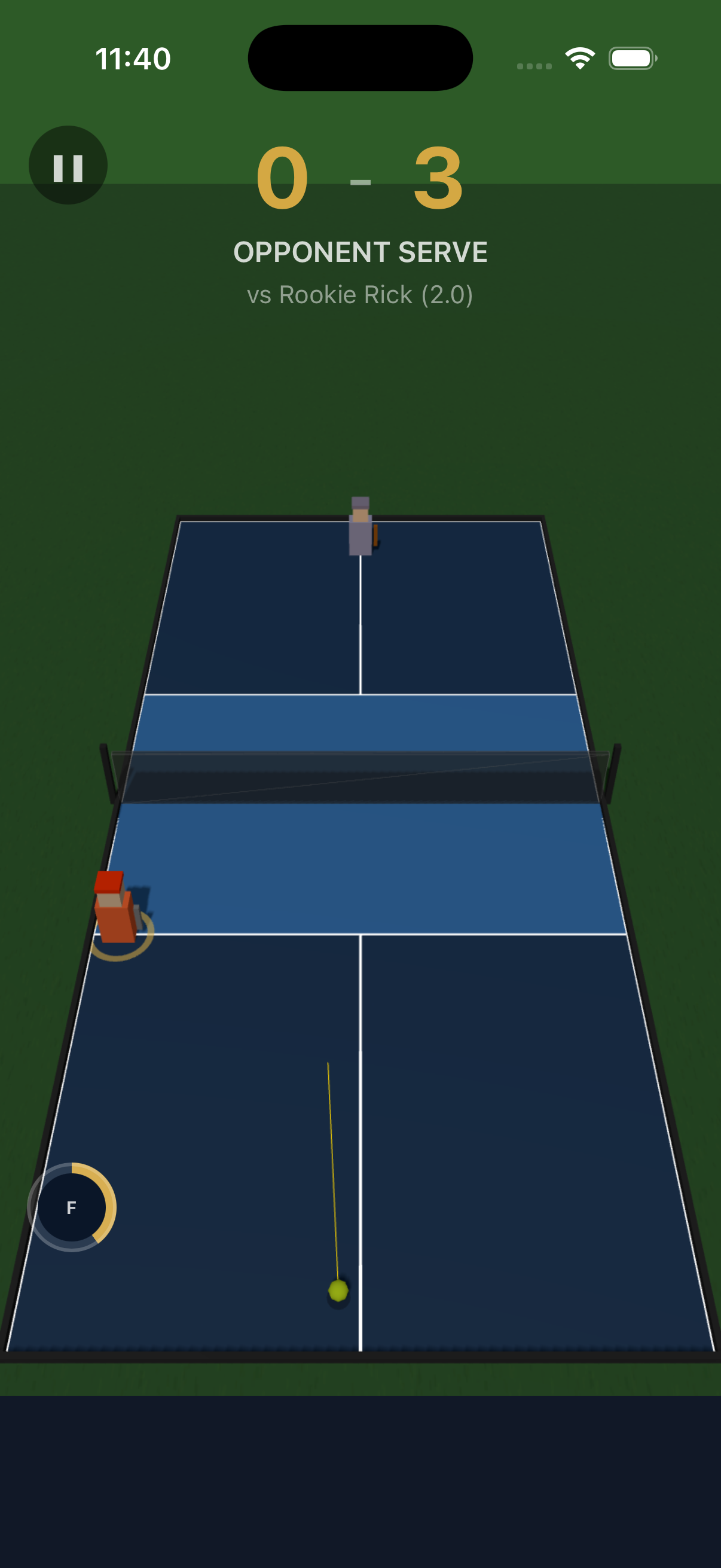
Pickleball Go! is a full mobile pickleball game built with Three.js and Capacitor. 17,000+ lines of code across 70 source files. Custom physics engine with proper pickleball rules enforcement — kitchen zones, two-bounce rule, diagonal serves. Seven AI difficulty levels with distinct personalities. Six playable characters with unique stats. A paddle customization system. Career progression, achievements, daily challenges, XP tracking. Fourteen distinct game-feel systems: hitstop, screen shake, particles, ball trails, slow-mo replays, timing feedback. Swipe-based touch controls that actually feel responsive.
The entire thing — from the first commit to a build running on a real iPhone — was done in about 24 hours.
The Expendables: Seaplane Strike is a 3D aerial combat game. You fly an HU-16 Albatross seaplane over a procedurally generated tropical island, strafing enemy positions with twin nose guns, rockets, and bombs. Full 6-DOF flight physics. Seven enemy types. A gun heat system. Landing gear. Dual camera modes. A minimap. A complete HUD with speed, altitude, throttle, health, compass, and G-force readout. Mobile-optimized touch controls with a virtual joystick and haptic feedback. Procedural audio — no audio files at all, everything synthesized in real-time.
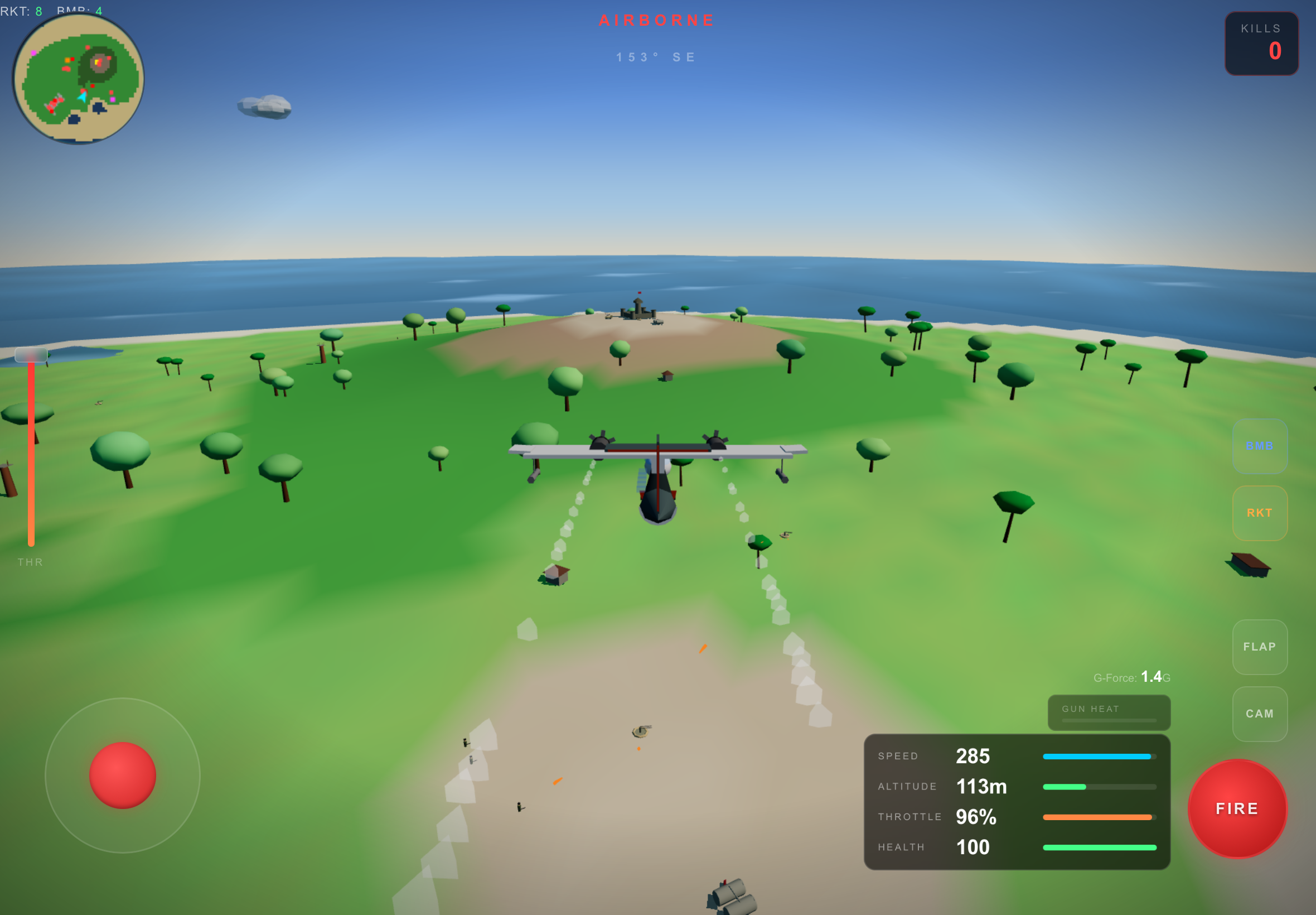
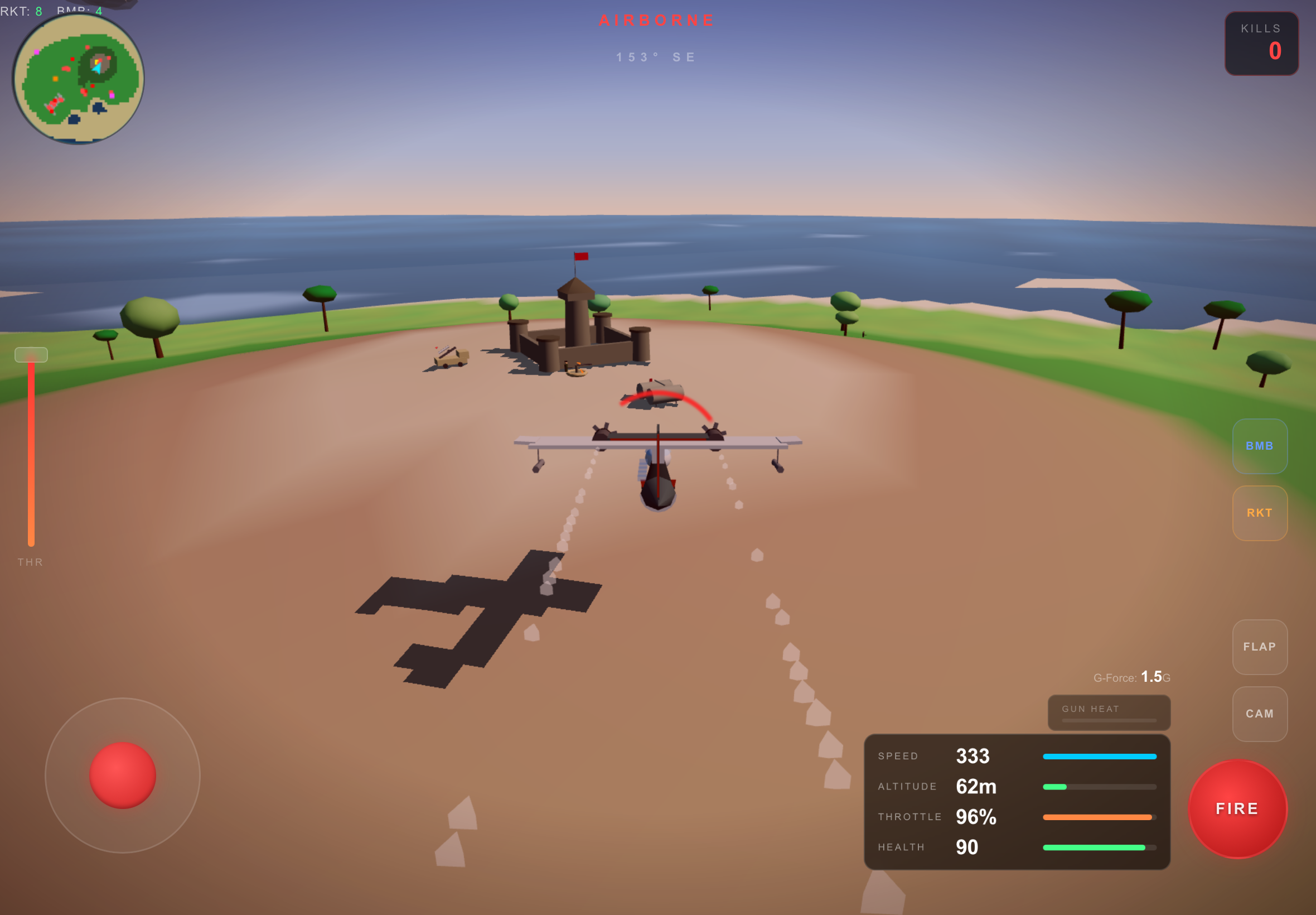
Both games. One weekend. Both on TestFlight.
When I showed the flight game to my 13-year-old daughter — who is not a gamer — she said: "This is like a real game."
That's the bar now. Not "impressive for AI-generated." Not "pretty good for a weekend." Just: real.
The Pattern
PlayTrack. A technical consulting engagement. A pickleball game. An aerial combat sim. Four completely different domains. Four completely different tech stacks. Four projects that would traditionally each require dedicated teams and weeks-to-months of development time.
Here's what that looks like side by side:
| PlayTrack | Consulting | Pickleball Go! | Expendables | |
|---|---|---|---|---|
| Domain | Figure skating analytics | Environmental data / cloud infra | Mobile gaming | 3D aerial combat |
| Tech Stack | React Native, Supabase, AI predictions, CI/CD | Multi-repo audit, cloud services, standalone HTML tools | Three.js, Capacitor, custom physics | Three.js, Capacitor, procedural audio, 6-DOF flight physics |
| Scale | 28K+ LOC, 133 commits | Multi-repo enterprise system | 17K+ LOC, 70 source files | Procedural terrain + audio, full HUD |
| Time to Ship | 7 days | Under 2 weeks | ~24 hours | Weekend |
| Traditional Timeline | 6-8 weeks | 4-6 weeks + team | 2-3 months + team | 3-4 months + team |
| Est. API Cost | ~$100 | ~$75-125 | ~$40-60 | ~$25-40 |
| Traditional Cost | $12-15K+ | $15-25K | $30-60K | $50-80K |
| Cost Compression | ~120-150x | ~150-200x | ~750-1,000x | ~1,500-2,500x |
Four projects. Total estimated API spend: under $350. Traditional development cost for the same output: $107-180K minimum. That's not an incremental improvement. It's a structural shift in the economics of building software.
The common thread isn't the technology. It's the methodology. In every case, the work followed the same pattern:
- I defined the architecture. What are we building? What should the user experience? What does "done" look like?
- I wrote zero-ambiguity specs. Detailed enough that an agent could execute without a single clarifying question.
- Agents built it. Fast. In parallel where possible.
- I reviewed, directed, and iterated. Catching what needed human judgment — the domain questions, the strategic decisions, the "what would a domain expert actually need" moments.
I didn't write most of the code in any of these projects. I designed the systems. I made the judgment calls. I asked the questions that shaped the output. And the result wasn't "good enough for AI" — it was work that made a domain expert compare it to enterprise software, that made a founder ask to put it in their product, that made a teenager say it felt real.
What This Means
I'm not writing this to brag. I'm writing it because I keep having the same conversation with CTOs and senior developers who hear these stories and think there must be a catch. There must be something I'm leaving out. It can't really be that fast, that broad, that good.
It is. And it's accelerating.
The catch isn't that the output is secretly mediocre. The catch is that this methodology requires a genuine shift in how you think about building software. You have to stop being the person who writes the code and start being the person who designs the system that writes the code. That's a different skill set. It requires different discipline. And most experienced developers haven't made the shift yet — not because they can't, but because they haven't internalized that they need to.
Every month the gap between agentic development and traditional development gets wider. The examples I just walked through would have been unthinkable a year ago. In another year, they'll be the baseline.
The question isn't whether this is real. It's whether you're going to start building this way before the window closes.
Dave Shak is a Fractional CTO and Agentic Development consultant based in Kitchener-Waterloo. He has 20+ years of experience scaling engineering organizations and now helps teams adopt agentic development workflows.